Follow Me On Social Media!
The Danish Almond Puff: A Scandi-Style Pastry Classic.

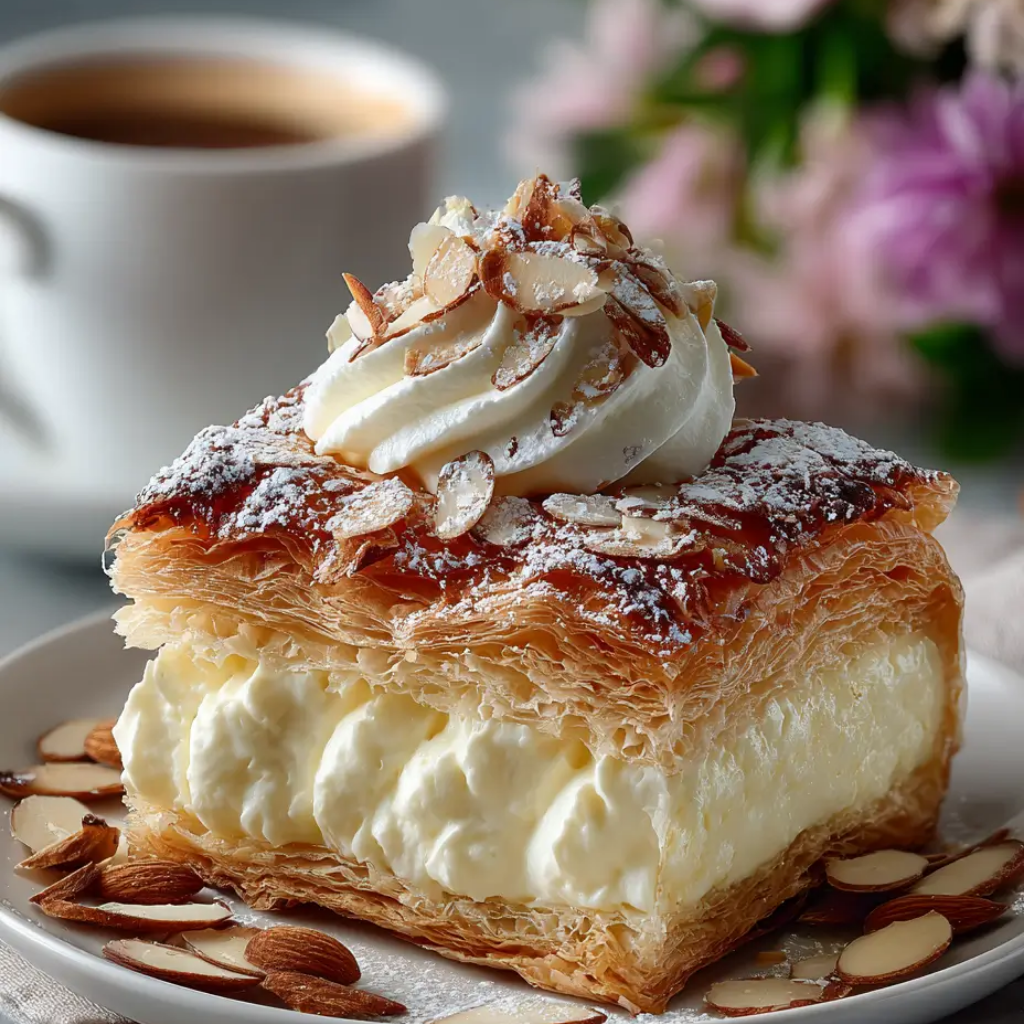
The Danish Almond Puff is a masterclass in textural contrast, combining a crisp, buttery shortbread base with a light, airy choux-style topping and a sweet almond glaze. Often found at Scandinavian holiday gatherings, this pastry is a “divided” dessert—it looks incredibly complex once sliced, but it relies on simple, honest techniques that any home baker can master.
What makes this recipe stand out is the dual-layer bake. The bottom layer acts as a sturdy, flaky foundation, while the top layer puffs up in the oven to create a hollow, custard-like center that traps steam and flavor. Finished with crunchy toasted almonds and a delicate icing, it is a reliable, nostalgic treat that pairs perfectly with a strong cup of coffee.
Ingredients
The Base Layer
- 1 Cup All-Purpose Flour.
- 1/2 Cup Unsalted Butter: Cold and cubed.
- 1 Tablespoon Cold Water.
The Puff Layer
- 1/2 Cup Unsalted Butter.
- 1 Cup Water.
- 1 Teaspoon Almond Extract.
- 1 Cup All-Purpose Flour.
- 3 Large Eggs: Room temperature.
The Almond Glaze & Topping
- 1.5 Cups Powdered Sugar.
- 2 Tablespoons Unsalted Butter: Melted.
- 1 Teaspoon Almond Extract.
- 1–2 Tablespoons Warm Milk.
- 1/2 Cup Sliced Almonds: Toasted.
Instructions
1. Prepare the Base
Preheat your oven to 180°C (350°F). In a medium bowl, cut the cold butter into the flour using a pastry cutter or two knives until the mixture resembles coarse crumbs. Stir in the cold water. Divide the dough in half and pat each half into a long strip (about 12×3 inches) on an ungreased baking sheet. Space the strips at least 3 inches apart.
2. Cook the Puff Topping
In a medium saucepan, bring the 1/2 cup butter and 1 cup water to a rolling boil. Remove from the heat and immediately stir in the almond extract and the flour. Stir vigorously with a wooden spoon until the mixture forms a ball and pulls away from the sides of the pan.
3. Incorporate the Eggs
Add the eggs to the flour mixture one at a time, beating thoroughly after each addition until the batter is smooth and shiny. This is essentially a pâte à choux—the eggs provide the steam needed to make the pastry “puff.”
4. Assemble and Bake
Spread the puff mixture evenly over the two base strips, covering them completely to the edges. Bake for 50 to 60 minutes, or until the topping is a deep golden brown and feels firm to the touch. Do not underbake, or the puff will collapse as it cools.
5. Glaze and Garnish
While the puff is still slightly warm, whisk together the powdered sugar, melted butter, almond extract, and enough milk to create a drizzling consistency. Pour the glaze over the strips and immediately sprinkle with the toasted sliced almonds.
Flavor & Texture Notes
The primary sensation of this pastry is the interplay of temperatures and textures. The base is short and crumbly, while the puff layer is ethereal and egg-rich, almost like a flattened cream puff.
The almond extract provides a sweet, marzipan-like aroma that is mirrored in the shattered-glass crunch of the toasted almonds on top. It is a light, sophisticated sweetness that isn’t cloying, making it a favorite for brunch or afternoon tea.
Tips & Variations
- Fruit Fillings: For a fruity twist, spread a very thin layer of raspberry or apricot jam over the base layer before adding the puff topping.
- The “No-Collapse” Secret: If your puff looks done but feels soft, turn off the oven and crack the door open, letting the pastry sit inside for 10 minutes to dry out the centers.
- Vanilla Version: If almond is too strong for your palate, replace all almond extract with pure vanilla extract for a more mellow, buttery flavor.
Storage & Make-Ahead
- Room Temperature: This pastry is best eaten the day it is made to maintain the crispness of the base. Store leftovers in a loosely covered container for up to 2 days.
- Do Not Refrigerate: The moisture in the fridge will cause the puff layer to become rubbery and the base to lose its snap.
- Make-Ahead: You can prepare the base strips and the puff batter a few hours in advance, but for the best results, bake them immediately before you plan to serve.
FAQ
Why did my puff layer sink?
This is usually caused by taking it out of the oven too early. The internal steam needs to escape and the structure needs to set completely. Ensure the pastry is a rich golden brown, not pale, before removing.
Can I use a stand mixer for the eggs?
Yes. Adding the eggs to the hot flour mixture in a stand mixer with the paddle attachment is much easier on the arms and ensures a perfectly smooth batter.
Do I need to grease the baking sheet?
No. There is enough butter in the base layer to prevent sticking. Using parchment paper is a great alternative for easy cleanup and transfer.
Conclusion
The Danish Almond Puff is an enduring classic because it delivers a high-end bakery experience using basic pantry staples. By following the two-step baking process and allowing the pastry enough time to dry in the oven, you create a dessert that is as beautiful to look at as it is to eat. It is a foolproof recipe for anyone looking to bring a touch of old-world Scandinavian charm to their table.