Follow Me On Social Media!
The Ultimate Soft and Chewy Chocolate Chip Cookie Cake.

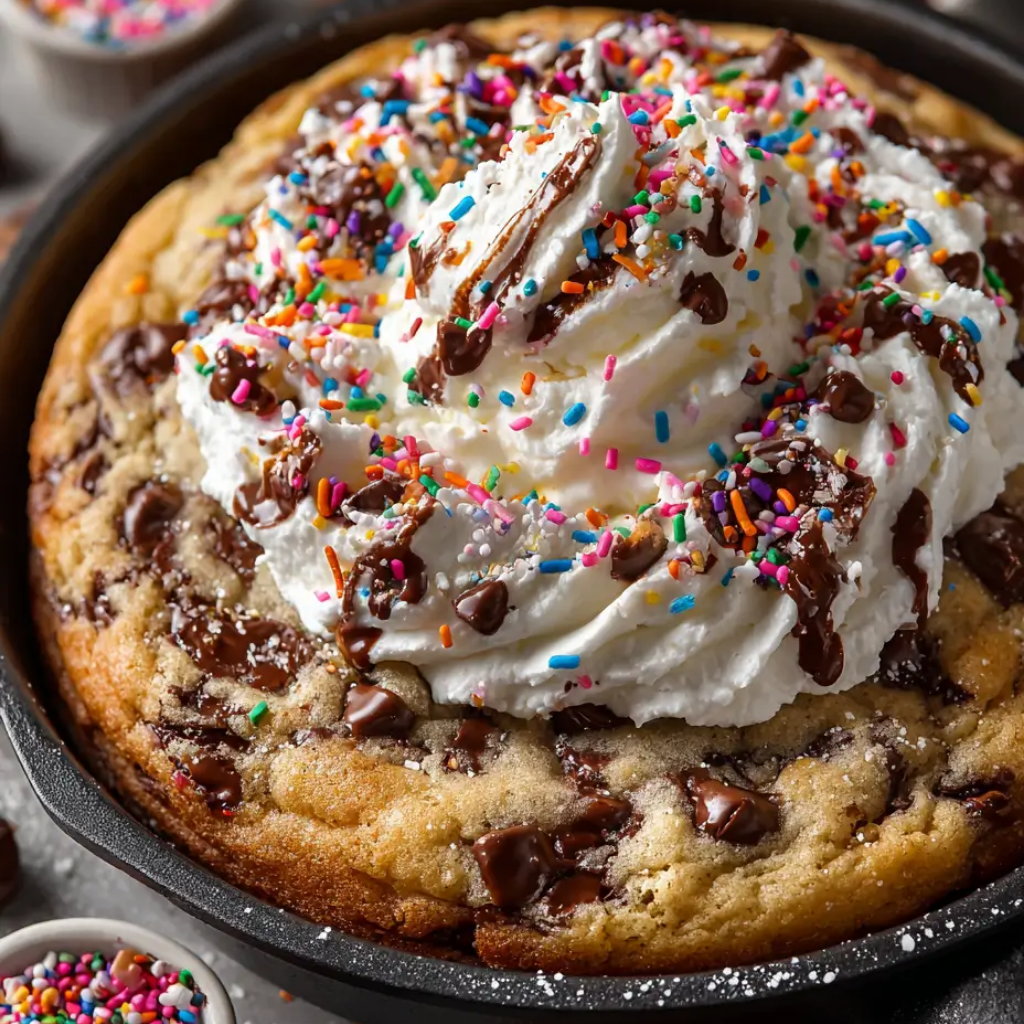
There is something inherently celebratory about a giant cookie. While a tray of individual cookies is great for a lunchbox or a quick snack, a chocolate chip cookie cake commands the room. It bridges the gap between the casual comfort of a cookie and the festive presence of a traditional layer cake. Most of us have fond memories of the mall-style cookie cakes from our childhood—those thick, overly sweet slices decorated with bright rings of buttercream. But as much as those hit the spot back then, they often lean a bit too hard on sugar and artificial flavorings.
This version is different. It is designed for the home baker who wants that specific soft, dense, and chewy texture but with better ingredients and a deeper flavor profile. We are leaning into the richness of brown sugar and high-quality vanilla to create a base that stays soft for days. Whether you are baking this for a birthday, a potluck, or just because it’s Tuesday, this recipe is a reliable staple that yields a perfect result every single time.
Ingredients for the Perfect Cookie Cake
To get that specific “cookie cake” texture—which is softer than a standard cookie but sturdier than a blondie—the ratios matter. Using a bit of cornstarch helps keep the crumb tender, while an extra egg yolk adds the necessary richness.
The Cookie Base
- Unsalted Butter: 3/4 cup (170g), softened to room temperature.
- Brown Sugar: 3/4 cup (150g), packed. Dark brown sugar works best here for a deep toffee flavor.
- Granulated Sugar: 1/4 cup (50g).
- Egg: 1 large, at room temperature.
- Egg Yolk: 1 large, to add moisture and chew.
- Vanilla Extract: 1 tablespoon. Don’t be afraid to be generous; it’s the backbone of the flavor.
- All-Purpose Flour: 2 cups (250g). Spoon and leveled to avoid a dry cake.
- Cornstarch: 2 teaspoons. This is the secret to a soft, “melt-in-your-mouth” texture.
- Baking Soda: 1 teaspoon.
- Salt: 1/2 teaspoon. Fine sea salt is ideal.
- Semi-Sweet Chocolate Chips: 1 1/4 cups. You can also use chopped chocolate bars for better melting.
Optional Chocolate Buttercream Frosting
- Unsalted Butter: 1/2 cup (115g), softened.
- Powdered Sugar: 1 1/2 cups (180g).
- Unsweetened Cocoa Powder: 1/4 cup (25g).
- Heavy Cream: 1-2 tablespoons, to adjust consistency.
- Salt: A tiny pinch to balance the sugar.
Step-by-Step Baking Instructions
Preparation and Creaming
Start by preheating your oven to 350°F (175°C). For this recipe, a 9-inch springform pan or a regular round cake pan works best. Grease the pan thoroughly with butter or non-stick spray, and line the bottom with a circle of parchment paper. This ensures the cake comes out cleanly without leaving half the bottom behind.
In a large bowl, or the bowl of a stand mixer fitted with the paddle attachment, beat the softened butter, brown sugar, and granulated sugar together. You want to cream them on medium-high speed for about 2 to 3 minutes. The mixture should look pale and fluffy. This step incorporates air, which helps the cake rise just enough to stay light.
Incorporating the Wet Ingredients
Lower the mixer speed and add the whole egg, the extra egg yolk, and the vanilla extract. Mix until just combined. Scrape down the sides of the bowl with a rubber spatula to make sure everything is evenly incorporated. It’s important that your eggs are at room temperature so they don’t cause the creamed butter to seize up.
Mixing the Dry Ingredients
In a separate medium bowl, whisk together the flour, cornstarch, baking soda, and salt. With the mixer on low, gradually add the dry ingredients to the wet mixture. Mix until only a few streaks of flour remain.
At this point, fold in the chocolate chips by hand using a spatula. This prevents the dough from being overmixed, which can lead to a tough, bready texture rather than a chewy one. Save a handful of chips to press into the top later for a more polished look.
Pressing and Baking
Transfer the dough into your prepared pan. Because the dough is thick and sticky, it helps to lightly grease your hands or the back of a spoon to press it into an even layer. Make sure it reaches the edges of the pan. Sprinkle those reserved chocolate chips over the top.
Bake for 20 to 25 minutes. The key is to look for golden-brown edges while the center still looks slightly soft and underbaked. It will continue to firm up as it cools in the pan. If you overbake it, the cake will lose that signature chew and become crunchy.
Cooling and Decorating
Allow the cookie cake to cool completely in the pan for at least an hour. If you try to remove it while it’s warm, it may crack or crumble. Once cool, run a thin knife around the edge and lift it out.
If you choose to add frosting, whip the butter, powdered sugar, cocoa, and cream together until smooth. Pipe stars or swirls around the border. This adds a nice visual touch and a bit of extra decadence to every bite.
Flavor and Texture Notes
This cookie cake hits several sensory notes at once. The first thing you notice is the texture of the edges—they are slightly crisp and caramelized where the sugar has met the heat of the pan. Moving toward the center, the crumb becomes incredibly dense, soft, and moist. The cornstarch and the extra egg yolk work together to create a fudge-like consistency that isn’t heavy.
Flavor-wise, the dominant note is toasted butter and molasses from the dark brown sugar. It feels more sophisticated than a standard store-bought treat. The salt is crucial here; it cuts through the sweetness of the chocolate chips and prevents the cake from being cloying. When you hit a pocket of melted chocolate, it contrasts beautifully with the vanilla-forward dough.
Tips and Creative Variations
While the classic chocolate chip version is a crowd-pleaser, this base recipe is quite versatile. You can easily adapt it to suit different tastes or dietary needs.
- The Chocolate Swap: Replace half of the semi-sweet chips with white chocolate chips, dark chocolate chunks, or even butterscotch chips.
- Nutty Addition: Fold in 1/2 cup of toasted chopped walnuts or pecans for an added crunch that balances the soft dough.
- Salted Caramel Twist: Drizzle the top with homemade salted caramel after baking and finish with a sprinkle of flaky sea salt.
- Gluten-Free Option: This recipe works surprisingly well with a high-quality 1:1 gluten-free flour blend. Just ensure the blend contains xanthan gum to help with the structure.
- M&M Version: For a colorful birthday look, replace half the chocolate chips with candy-coated chocolates. Press extra candies into the top before baking for a bright, festive appearance.
Storage and Make-Ahead Advice
One of the best things about a cookie cake is its shelf life. Because of the high sugar and fat content, it stays fresh longer than a traditional sponge cake.
- Room Temperature: Store the cake in an airtight container or tightly wrapped in plastic wrap for up to 4 days. It remains soft at room temperature.
- Freezing: You can freeze the entire cake or individual slices. Wrap them tightly in plastic wrap and then a layer of aluminum foil. It will keep well for up to 3 months. To serve, let it thaw on the counter for a few hours.
- Make-Ahead Dough: You can prepare the dough up to 48 hours in advance. Keep it covered in the refrigerator. When you are ready to bake, let it sit at room temperature for 20 minutes so it’s soft enough to press into the pan.
Serving Suggestions
A cookie cake is casual by nature, so you don’t need fancy plating.
- Warm and A La Mode: If you aren’t frosting the cake, try serving slices slightly warmed in the microwave for 10 seconds, topped with a scoop of cold vanilla bean ice cream.
- The Party Platter: Cut the cake into small squares or wedges and arrange them on a board with fresh strawberries or raspberries. The tartness of the fruit cleanses the palate between rich bites.
- Milk Pairings: It might seem cliché, but a cold glass of milk or a hot cup of coffee is the natural partner for this treat. The bitterness of coffee, in particular, highlights the toasted notes in the dough.
FAQ
Can I use a different size pan?
Yes. If you use a 10-inch pan, the cake will be thinner and may bake faster (check it at 18 minutes). If you use an 8-inch pan, it will be very thick and might need closer to 30 minutes. Just keep an eye on the edges.
Why is my cookie cake dry?
Dryness usually comes from two things: too much flour or overbaking. Ensure you are using the “spoon and level” method for your flour rather than scooping directly with the measuring cup. Also, remember to pull the cake out when the center still looks a bit “wet”—it will set as it cools.
Do I have to use a springform pan?
Not at all. A regular 9-inch cake pan or even a 9-inch pie dish works perfectly. If using a regular cake pan, just ensure you line it with parchment paper so you can lift the cake out easily.
Can I make this without a mixer?
Absolutely. Since we are using softened butter, you can cream the sugars and butter by hand with a sturdy whisk or a wooden spoon. It takes a bit more elbow grease, but the result will be just as good.
Conclusion
Baking a cookie cake at home is one of those simple kitchen wins that yields high rewards for relatively little effort. It lacks the fuss of stacking cake layers or worrying about perfectly smooth icing, yet it feels special enough for any milestone. The combination of that soft, chewy center and those buttery, golden edges makes it a recipe you will likely find yourself coming back to again and again.
Once you pull this out of the oven and the scent of toasted sugar fills the room, you’ll see why it’s such a favorite. Grab a glass of milk, cut a generous wedge, and enjoy a treat that truly lives up to the hype.