Follow Me On Social Media!
The Ultimate Comfort: Homemade Chicken Pot Pie with a Flaky Double Crust.

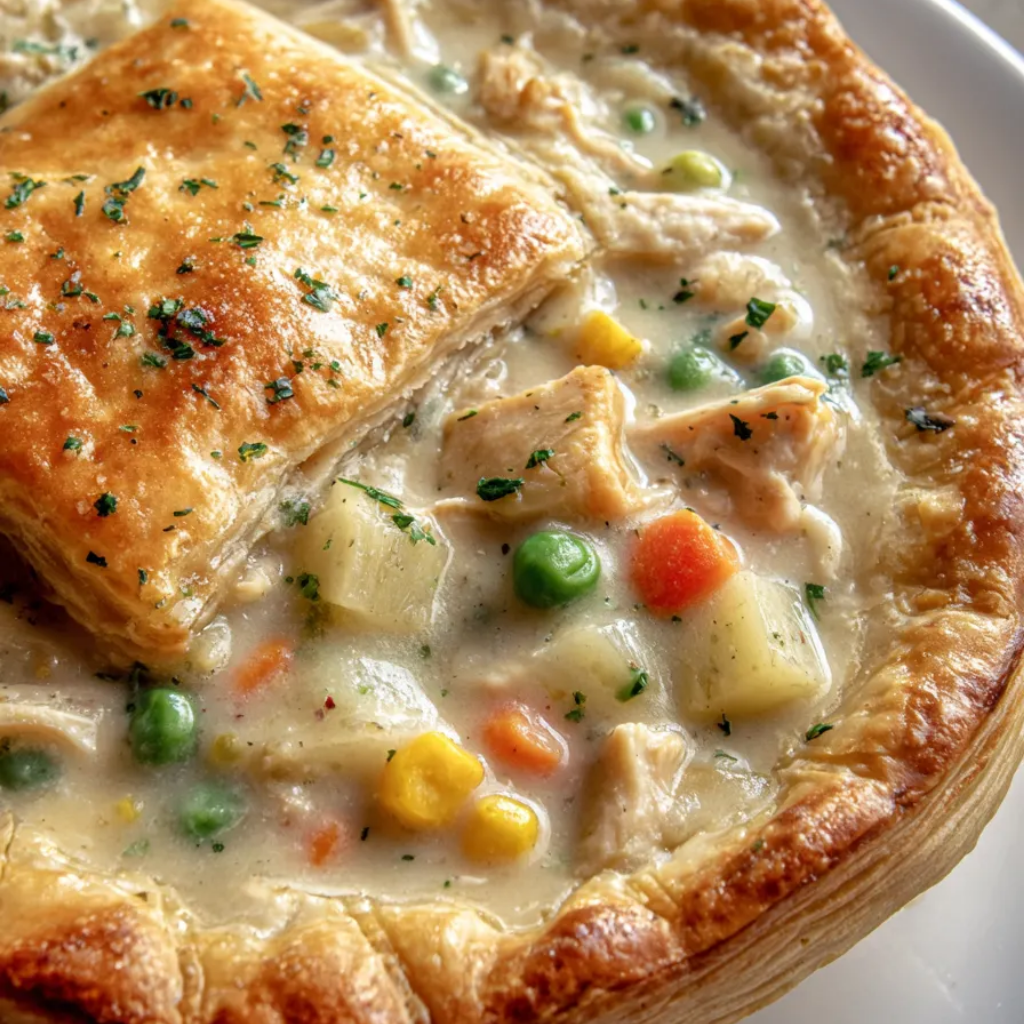
There is a specific kind of magic in a homemade chicken pot pie. It is the quintessential comfort food, the kind of meal that feels like a warm hug on a cold, rainy evening. While the frozen versions have their place in a pinch, they can’t compete with the texture of a crust made with real butter or a filling simmered with fresh herbs and heavy cream.
This recipe focuses on the balance between a thick, savory gravy and a crust so flaky it shatters when your fork hits it. We aren’t looking for a soupy filling here; we want a rich, velvety sauce that holds the chicken and vegetables together in every bite. This is a project meal—something to enjoy making on a Sunday afternoon when the kitchen is warm and there’s no rush to be anywhere else.
Ingredients for the Classic Pot Pie
For the best results, use a mix of textures. Using a rotisserie chicken is a great time-saver, but poaching your own chicken breast or thighs in stock adds an extra layer of depth to the filling.
The All-Butter Crust
- All-Purpose Flour: 2 1/2 cups (315g).
- Unsalted Butter: 1 cup (225g), cold and cubed.
- Salt: 1 teaspoon.
- Ice Water: 6 to 8 tablespoons.
The Filling
- Chicken: 3 cups cooked chicken, shredded or cubed.
- Butter: 1/2 cup (115g).
- Yellow Onion: 1 medium, finely diced.
- Carrots: 2 medium, peeled and diced into small rounds.
- Celery: 2 stalks, chopped.
- Garlic: 3 cloves, minced.
- All-Purpose Flour: 1/2 cup (65g) to thicken the sauce.
- Chicken Stock: 2 cups, preferably low-sodium so you can control the salt.
- Heavy Cream: 1/2 cup.
- Frozen Peas: 1 cup.
- Fresh Thyme: 1 tablespoon, chopped (or 1 teaspoon dried).
- Fresh Parsley: 2 tablespoons, chopped.
- Salt and Black Pepper: To taste.
- Egg Wash: 1 egg beaten with a splash of water.
Step-by-Step Instructions
Making the Crust
Start with the pastry so it has time to chill. In a large bowl, whisk together the flour and salt. Add the cold, cubed butter. Use a pastry cutter or your fingers to work the butter into the flour until it resembles coarse crumbs with some pea-sized chunks of butter remaining.
Gradually add the ice water, one tablespoon at a time, tossing with a fork until the dough just begins to come together. Turn it out onto a floured surface, divide it into two discs, wrap them in plastic, and refrigerate for at least one hour. This prevents the butter from melting and ensures those flaky layers.
Sautéing the Aromatics
In a large skillet or Dutch oven, melt the 1/2 cup of butter over medium heat. Add the onion, carrots, and celery. Cook for about 8 to 10 minutes until the vegetables are softened and the onions are translucent. Stir in the garlic and cook for just another minute until fragrant.
Creating the Velouté
Sprinkle the 1/2 cup of flour over the cooked vegetables. Stir constantly for 2 minutes to cook out the raw flour taste; the mixture will look like a thick paste. Slowly whisk in the chicken stock, pouring in a little at a time to avoid lumps. Bring the mixture to a simmer and let it thicken for about 5 minutes.
Once thickened, stir in the heavy cream, the shredded chicken, frozen peas, thyme, and parsley. Taste the filling and season generously with salt and pepper. Set the filling aside to cool slightly while you roll out the dough.
Assembly
Preheat your oven to 400°F (200°C). Roll out one disc of dough on a floured surface to about 12 inches in diameter. Fit it into a 9-inch deep-dish pie plate. Pour the slightly cooled chicken filling into the bottom crust.
Roll out the second disc of dough and place it over the top. Trim the excess, fold the edges under, and crimp them with your fingers or a fork to seal the pie. Use a sharp knife to cut 4 or 5 slits in the top crust to allow steam to escape.
The Bake
Brush the entire top of the pie with the egg wash. This is what gives the crust that deep, golden-brown sheen. Place the pie on a baking sheet (to catch any drips) and bake for 35 to 45 minutes. The crust should be golden and the filling should be bubbling through the vents.
Flavor and Texture Notes
The first thing you’ll notice is the contrast between the lid of the pie and the filling. The crust is incredibly buttery and crisp, providing a structural snap to the dish. Inside, the sauce is creamy and rich, but it isn’t “gloppy.” It has a clean chicken flavor heightened by the woodsy notes of fresh thyme.
The vegetables should be tender but still hold their shape, providing small bursts of sweetness from the carrots and peas. Because we use a significant amount of black pepper, there is a very gentle back-end heat that cuts through the heaviness of the cream and butter.
Tips and Variations
- The Shortcuts: If you are short on time, use high-quality store-bought refrigerated pie crusts and a rotisserie chicken. You can still make the filling from scratch to keep that homemade flavor.
- Vegetable Swaps: Feel free to add diced potatoes (par-boil them first), pearl onions, or sautéed mushrooms to the mix.
- Individual Pot Pies: Instead of one large pie, divide the filling into 4 or 6 ramekins. Top each with a circle of dough and bake for 20-25 minutes.
- Biscuit Topping: If you prefer a thicker, breadier topping, drop homemade or canned biscuit dough over the filling instead of a traditional pie crust.
Storage and Make-Ahead
- Refrigerating: Keep leftover pot pie in the fridge for up to 3 days. Reheat in the oven at 350°F to help the crust stay crisp; the microwave will make the pastry soggy.
- Freezing (Unbaked): You can assemble the entire pie, wrap it tightly in several layers of plastic wrap and foil, and freeze for up to 2 months. Bake from frozen at 375°F for 70-80 minutes, covering the edges with foil if they brown too quickly.
- Make-Ahead Filling: You can make the filling up to two days in advance and keep it in the fridge. This actually makes assembly easier as the cold filling won’t melt the bottom crust as quickly.
Serving Suggestions
Chicken pot pie is a complete meal on its own, but a few light sides can balance the richness.
- A Simple Green Salad: A basic arugula or bibb lettuce salad with a sharp lemon vinaigrette provides a nice acidic contrast to the heavy gravy.
- Roasted Broccoli: Long-stemmed roasted broccoli with a squeeze of lemon and some red pepper flakes adds a nice charred element to the table.
- Cranberry Sauce: Much like with a turkey dinner, a small side of tart cranberry sauce pairs beautifully with the savory chicken and cream.
FAQ
Why is my bottom crust soggy?
This usually happens if the filling is too hot when added or if the oven temperature is too low. Letting the filling cool for 15 minutes before assembly and baking on the bottom rack of the oven for the first 15 minutes can help set the base.
Can I use milk instead of heavy cream?
You can, but the filling will be thinner and less rich. If you use milk, you may want to increase the flour by a tablespoon to ensure the sauce thickens enough to hold its shape.
How do I prevent the edges from burning?
If the fluted edges of your pie are browning too fast while the center is still pale, loosely wrap the edges with a strip of aluminum foil (a “pie shield”) for the remainder of the bake.
Conclusion
There is no substitute for a chicken pot pie made from scratch. It requires a bit of patience and a messy countertop covered in flour, but the result is a dish that defines home cooking. When you pull that bubbling, golden-brown pie out of the oven, you’ll understand why it remains one of the most beloved recipes in the culinary canon.