Follow Me On Social Media!
Roasted Root Vegetables: A Simple and Delicious Side Dish.

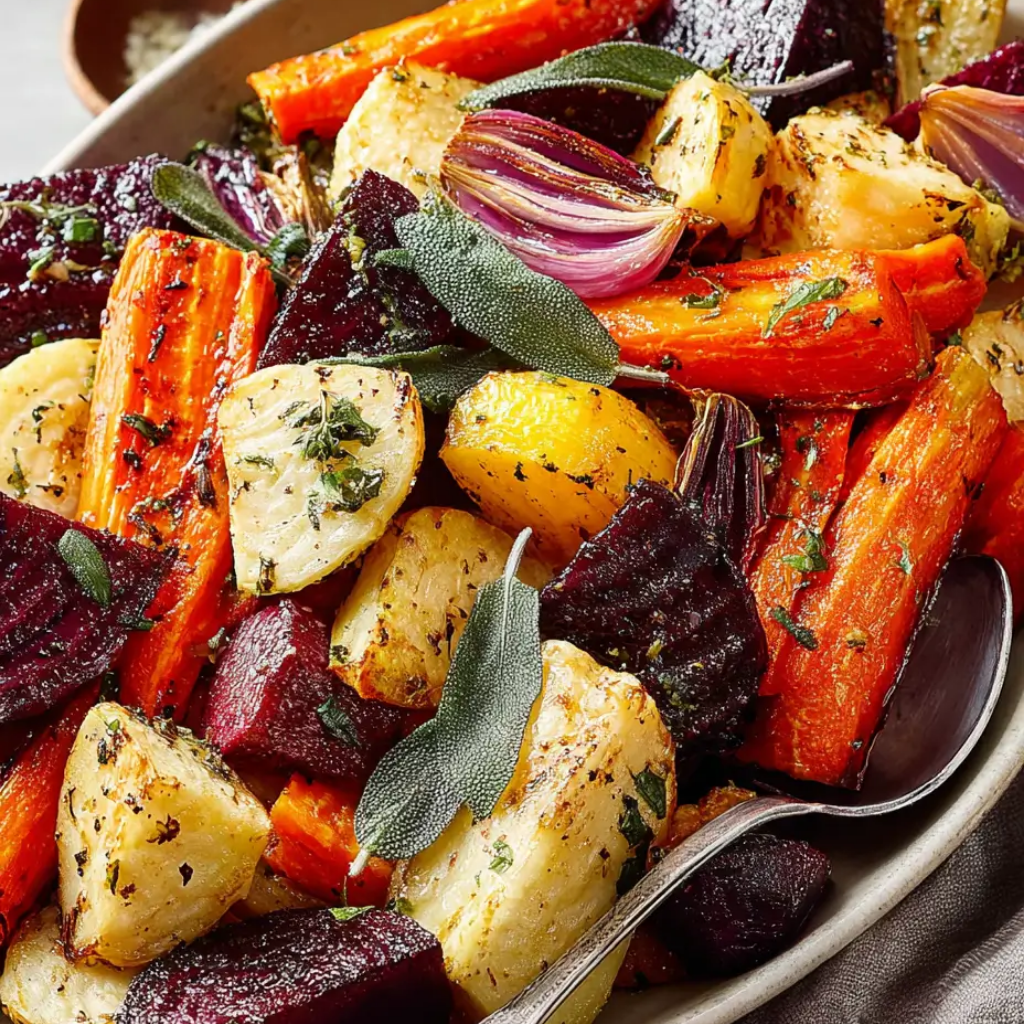
There is a primitive satisfaction in a tray of perfectly roasted root vegetables. When subjected to the high, dry heat of an oven, the starches within carrots, parsnips, and potatoes undergo the Maillard reaction, transforming their humble, earthy profiles into something intensely sweet and savory. This dish is the ultimate supporting player—versatile enough to sit alongside a Sunday roast, a piece of grilled fish, or even a simple fried egg.1
The beauty of roasting roots lies in their resilience. Unlike delicate leafy greens, root vegetables can withstand significant heat, allowing their exteriors to develop a “candy-like” char while the interiors become as soft as butter. This recipe focuses on a balanced medley of textures and a simple herb infusion that highlights, rather than hides, the natural flavors of the harvest. It is a reliable, honest side dish that proves that minimal intervention often yields the most sophisticated results.
Ingredients
The Root Medley
- 3 Large Carrots: Peeled and cut into 1-inch chunks.
- 2 Large Parsnips: Peeled and cored (if very large), cut into similar sizes.
- 1 Medium Sweet Potato: Peeled and cubed.2
- 1/2 lb Baby Potatoes: Halved (yellow or red-skinned).
- 1 Red Onion: Cut into thick wedges (adds a necessary sharp sweetness).
The Aromatics
- 3 Tablespoons Extra Virgin Olive Oil: To ensure even browning.3
- 3 Cloves Garlic: Smashed but left in their skins to prevent burning.
- 2 Sprigs Fresh Rosemary: Or 1 teaspoon dried.
- 3 Sprigs Fresh Thyme: Or 1/2 teaspoon dried.
- 1 Teaspoon Sea Salt.
- 1/2 Teaspoon Cracked Black Pepper.
Instructions
1. The Prep and the Size
Preheat your oven to 200°C (400°F). The most important rule of roasting is uniformity. Ensure all your vegetable chunks are roughly the same size—about 1-inch cubes or batons. This ensures they all cross the finish line at the same time, preventing a scenario where the carrots are crunchy and the potatoes are mush.
2. The Toss
In a large bowl (or directly on a heavy-duty sheet pan), toss the vegetables with the olive oil, salt, pepper, and herbs. Ensure every piece is glistening with oil. The oil is the heat-conductor that creates the crispy exterior; without enough of it, the vegetables will simply dry out.
3. The Space Factor
Spread the vegetables out in a single layer. If the pan is too crowded, the vegetables will release steam and boil rather than roast. If you have a lot of vegetables, use two pans. Scatter the smashed garlic cloves amongst the roots.
4. The Roast
Place the pan in the oven for 35 to 45 minutes. At the 20-minute mark, use a spatula to toss the vegetables. This ensures that all sides make contact with the hot metal of the pan, leading to even caramelization.
5. The Finish
The vegetables are done when they are easily pierced with a fork and boast dark, golden-brown edges. Remove the woody herb stems and the garlic skins before serving.
Flavor & Texture Notes
The experience of this dish is defined by concentrated sweetness. As the water evaporates during roasting, the natural sugars become dense and jammy. You have the creamy, starchy interior of the potatoes meeting the slightly fibrous, honey-like bite of the parsnips.
The rosemary and thyme provide a woodsy, resinous aroma that cuts through the richness of the olive oil. The red onion, having softened into translucent ribbons, provides a mellow, savory funk that ties the earthy roots together.
Tips & Variations
- The Honey Glaze: For a more indulgent version, drizzle a tablespoon of honey or maple syrup over the vegetables during the last 10 minutes of roasting.
- Acidic Brightness: A splash of balsamic vinegar or a squeeze of fresh lemon juice just before serving can “wake up” the heavy flavors.
- The Core Issue: If your parsnips are very large, they may have a woody, tough core. It is best to slice them lengthwise and trim away the center before cubing.
- Spice it Up: Add a teaspoon of cumin seeds or smoked paprika for an earthier, warmer flavor profile.
Storage & Make-Ahead
- Refrigeration: Roasted roots keep remarkably well. Store in an airtight container for up to 4 days.
- The “Leftover” Hack: Cold roasted vegetables are excellent in salads or grain bowls.
- Reheating: To restore the crispness, reheat them in a hot pan with a drop of oil or in an air fryer for 3 minutes. Avoid the microwave, as it will make them rubbery.
FAQ
Do I have to peel the carrots?
For roasting, yes. Carrot skins can become tough and develop a slightly bitter, “soapy” taste when subjected to high heat for a long period. Peeling ensures a cleaner, sweeter flavor.
Why are my vegetables soggy?
Sogginess is almost always caused by overcrowding the pan. If the moisture escaping the vegetables can’t evaporate quickly, it turns into steam. Give them space!
Can I use frozen vegetables?
It is not recommended for this specific roasting method. Frozen vegetables have already had their cell walls broken down by ice crystals, which leads to a mushy texture when roasted.4 Fresh is essential for that “snap.”
Conclusion
Roasted root vegetables are a testament to the power of high heat and simple seasoning. By taking the time to cut them uniformly and giving them enough space to breathe on the pan, you transform basic ingredients into a colorful, flavorful side dish that complements almost any meal. It is a foolproof technique that belongs in every cook’s repertoire.