Follow Me On Social Media!
Maple-Glazed Salmon with Roasted Root Vegetables.

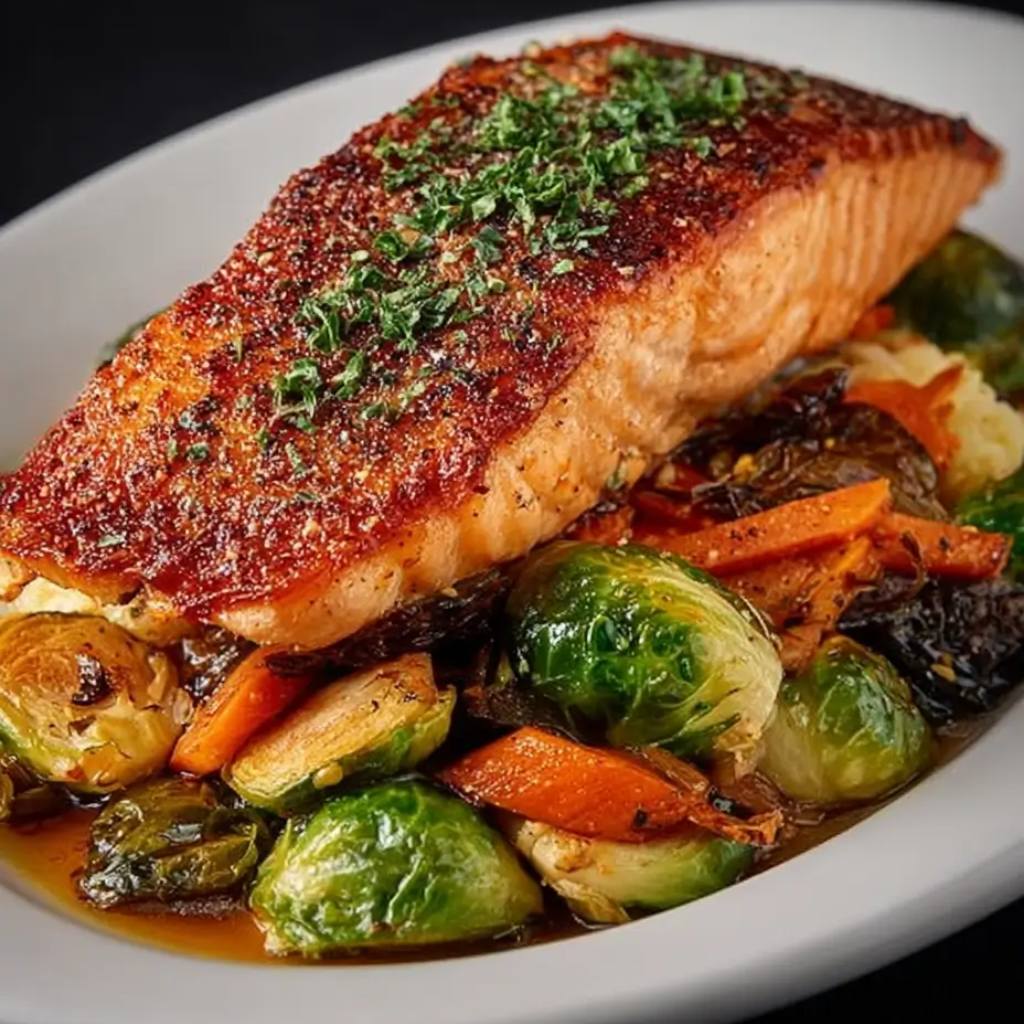
There is a natural affinity between the earthy, grounded flavors of root vegetables and the clean, fatty richness of a fresh salmon fillet. When you introduce a glaze of pure maple syrup, you aren’t just adding sweetness; you are creating a bridge between the savory char of the vegetables and the delicate flakes of the fish. This one-pan meal is designed for those who value efficiency without wanting to sacrifice the depth of flavor found in slow-cooked dishes.
I developed this recipe to solve the “timing” problem often found in sheet-pan dinners. Root vegetables require a high-heat roasting period to become tender and caramelized, while salmon needs a quick, gentle cook to stay moist. By staggering the entry of the ingredients into the oven, you ensure that the carrots and parsnips are perfectly browned just as the salmon reaches a buttery finish. It is an honest, nutrient-dense meal that relies on the natural sugars of the maple and the vegetables to create a sophisticated, restaurant-quality crust.
Ingredients
The Roasted Roots
- 3 Large Carrots: Peeled and cut into 2-inch batons.
- 2 Large Parsnips: Peeled and cut to match the carrots.
- 1 Medium Sweet Potato: Peeled and cut into 1-inch cubes.
- 2 Tablespoons Extra Virgin Olive Oil.
- 1/2 Teaspoon Sea Salt.
- 1/4 Teaspoon Black Pepper.
- 1/2 Teaspoon Dried Thyme.
The Maple-Glazed Salmon
- 4 Salmon Fillets: Approximately 170g each, skin-on for better moisture retention.
- 1/4 Cup Pure Maple Syrup: Grade A Dark or Amber.1
- 1 Tablespoon Dijon Mustard: Adds a necessary acidic tang.
- 1 Tablespoon Soy Sauce: For a savory, umami-rich base.
- 1 Clove Garlic: Grated or finely minced.
- 1/4 Teaspoon Smoked Paprika.
The Garnish
- Fresh Parsley: Roughly chopped.
- Lemon Wedges: For serving.2
Instructions
1. Roast the Vegetables
Preheat your oven to 200°C. On a large, parchment-lined sheet pan, toss the carrots, parsnips, and sweet potatoes with the olive oil, salt, pepper, and thyme. Spread them out in a single layer, ensuring they aren’t crowded so they roast rather than steam.3 Place the pan in the oven and roast for 20 minutes, tossing them once halfway through.
2. Prepare the Maple Glaze
While the vegetables are roasting, whisk together the maple syrup, Dijon mustard, soy sauce, minced garlic, and smoked paprika in a small bowl. This glaze should be thick enough to coat the back of a spoon. Set aside about two tablespoons of the glaze to use for a fresh drizzle at the end.
3. Add the Salmon
Remove the sheet pan from the oven and move the vegetables to the outer edges to create space in the center for the salmon. Pat the salmon fillets completely dry with paper towels—this is the secret to getting the glaze to stick. Place the fillets on the pan and brush them generously with the maple mixture.
4. The Final Bake
Return the pan to the oven and bake for another 12 to 15 minutes. The salmon is done when it flakes easily with a fork and the glaze has bubbled into a dark, shiny lacquer. The vegetables should be tender and caramelized on the edges.
5. Rest and Garnish
Let the pan rest for 3 to 5 minutes before serving. This allows the juices in the salmon to redistribute. Drizzle with the reserved glaze, sprinkle with fresh parsley, and serve with a squeeze of lemon to brighten the flavors.
Flavor & Texture Notes
The standout feature of this dish is the caramelized complexity. The maple syrup undergoes a transformation in the oven, reducing into a sticky, woodsy coating that balances the savory, salt-forward soy and mustard.
Texture-wise, you have the creamy softness of the sweet potatoes and parsnips contrasting with the crispy, charred edges of the carrots. The salmon remains velvety and tender inside, protected by the heat-shielding properties of the maple-mustard crust. It is a harmonious, earthy meal that feels like a celebration of the harvest.
Tips & Variations
- The Nutty Crunch: Sprinkle a tablespoon of crushed walnuts or pecans over the salmon during the last 5 minutes of baking.
- Spicy Glaze: Add a half-teaspoon of red pepper flakes to the maple mixture if you prefer a “hot honey” style finish.
- Vegetable Swap: If you aren’t a fan of parsnips, Brussels sprouts or cauliflower florets work beautifully with this roasting time.
- Miso Maple: Replace the soy sauce with a tablespoon of white miso paste for a deeper, funkier umami profile.
Storage & Make-Ahead
- Refrigeration: Store any leftovers in an airtight container for up to 2 days.
- Reheating: To prevent the salmon from drying out, reheat in a 160°C oven covered with foil for about 10 minutes.
- Prep: You can chop all the vegetables and whisk the glaze up to 24 hours in advance. Keep them in separate containers in the fridge until you’re ready to roast.
FAQ
Can I use frozen salmon?
Yes, but ensure it is completely thawed and patted very dry. Frozen salmon often releases more moisture than fresh, which can dilute the glaze if not properly dried.
Is it necessary to peel the vegetables?
For parsnips and carrots, peeling is recommended as the skins can become tough and slightly bitter when roasted. For the sweet potato, you can leave the skin on if you prefer the extra fiber and texture.
Why did my glaze burn?
Maple syrup has a high sugar content.4 If your oven runs hot, the glaze may darken too quickly. If you notice it browning too much before the salmon is cooked, tent the fillets loosely with a piece of aluminum foil.
Conclusion
Maple-Glazed Salmon with Roasted Root Vegetables is a testament to the fact that healthy eating can be both efficient and indulgent. By allowing the natural sugars of the maple syrup and the root vegetables to harmonize in the heat of the oven, you create a meal that is deeply satisfying and visually beautiful. It is a foolproof recipe that works just as well for a busy weeknight as it does for a Saturday evening with guests.