Follow Me On Social Media!
Mango Cheesecake Cups (No-Bake): A Tropical Delight.

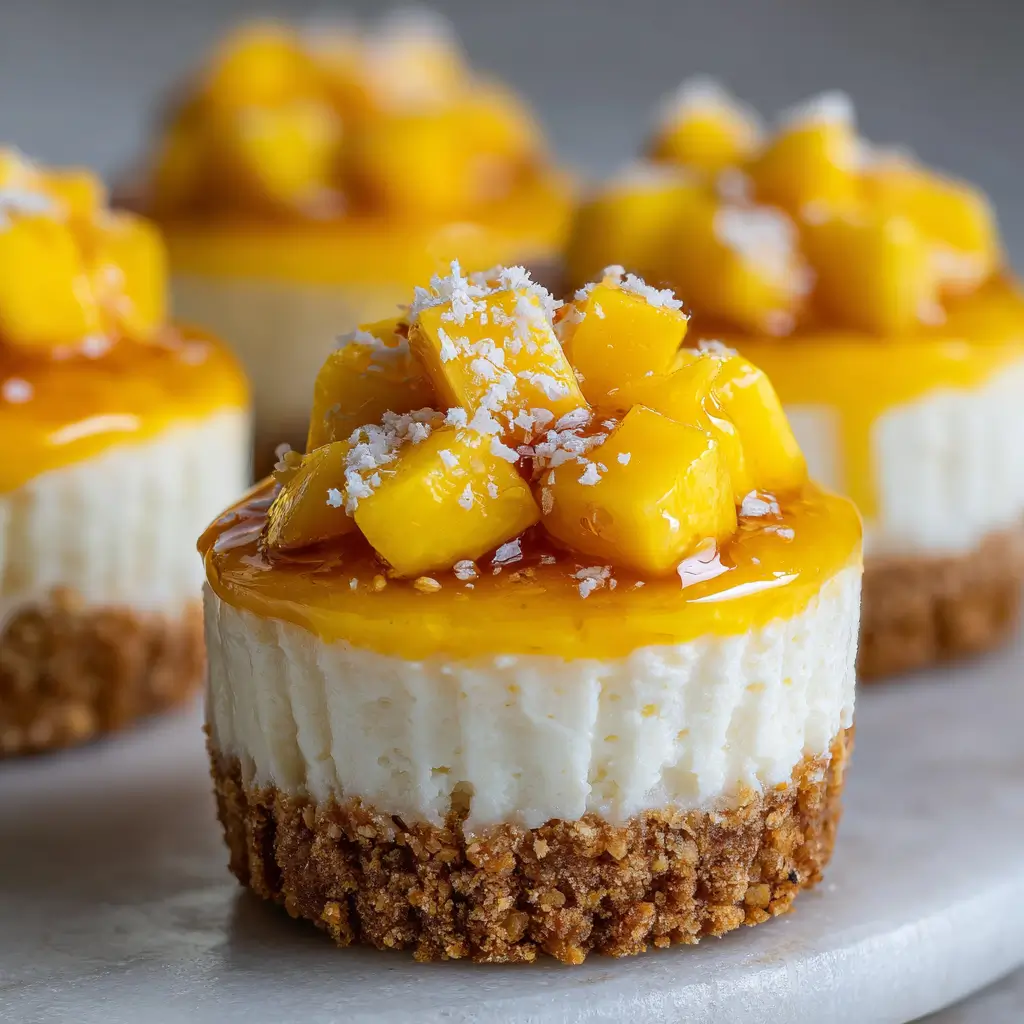
Mango cheesecake cups are the perfect solution for a sophisticated, tropical dessert that requires zero oven time. These individual servings feature three distinct layers: a buttery, salted graham cracker base, a silky cream cheese filling, and a vibrant, fresh mango gelée on top.
By serving these in glass jars or cups, you showcase the beautiful color contrast between the white cheesecake and the bright orange mango. It is a refreshing, “make-ahead” dessert that highlights the natural sweetness of ripe summer fruit.
Ingredients
For the best results, use Alphonso or Honey (Ataulfo) mangoes, as they have a smooth, non-fibrous texture and a deep aromatic sweetness.1
The Biscuit Base
- Graham Crackers or Digestive Biscuits: 150g (approx. 1 1/4 cups of crumbs).
- Unsalted Butter: 60g (4 tablespoons), melted.
- Sugar: 1 tablespoon (optional).
The Cheesecake Filling
- Cream Cheese: 250g (approx. 9 oz), softened.
- Heavy Whipping Cream: 200ml (approx. 3/4 cup), chilled.
- Powdered Sugar: 60g (1/2 cup).
- Mango Puree: 120ml (1/2 cup), fresh or canned.
- Vanilla Extract: 1/2 teaspoon.
The Mango Gelée Top
- Mango Puree: 240ml (1 cup).
- Sugar: 1-2 tablespoons (depending on the fruit’s ripeness).
- Gelatin Powder: 1 teaspoon (bloomed in 1 tablespoon cold water).
Instructions
Step 1: The Base
Combine the biscuit crumbs and melted butter in a small bowl. Press about 2 tablespoons of the mixture into the bottom of 6 to 8 small glass jars or dessert cups. Use the back of a spoon to pack it down firmly. Refrigerate while you prepare the filling.
Step 2: The Cheesecake Layer
In a large bowl, beat the softened cream cheese and powdered sugar until smooth and creamy. In a separate chilled bowl, whip the heavy cream until stiff peaks form. Gently fold the whipped cream, mango puree, and vanilla into the cream cheese mixture until no white streaks remain.
Step 3: First Set
Pipe or spoon the cheesecake mixture into the jars, leaving about half an inch of space at the top for the mango layer. Smooth the tops with a small spoon. Refrigerate for 1 hour to allow the surface to firm up.
Step 4: The Mango Gelée
Heat half of the mango puree with the sugar in a small saucepan over low heat until the sugar dissolves. Stir in the bloomed gelatin until fully melted. Remove from heat and stir in the remaining cold mango puree (this helps cool the mixture faster). Let the gelée cool to room temperature.
Step 5: The Final Layer
Carefully pour a thin layer of the mango gelée over the chilled cheesecake cups. Return the cups to the refrigerator for at least 4 hours, or ideally overnight, to set completely.
Flavor and Texture Notes
These cups are a study in balance. The biscuit base provides a salty, crunchy anchor to the ethereal lightness of the mousse-like cheesecake. The mango gelée adds a concentrated burst of acidity that cuts through the richness of the cream cheese. The overall experience is cool, creamy, and intensely fruity.
Tips for the Perfect Cup
- Avoid Fibers: If your mangoes are stringy, always pass the puree through a fine-mesh sieve before adding it to the cheesecake or gelée.
- Clean Layers: For the sharpest look, use a piping bag to fill the jars. This prevents the cheesecake mixture from smearing against the sides of the glass.
- Garnish: Just before serving, add a sprig of fresh mint or a few small cubes of fresh mango to the top.
FAQ
| Question | Answer |
| Can I make this vegan? | Yes, by using vegan cream cheese, coconut whipped cream, and agar-agar instead of gelatin. |
| How long do they last? | These are best enjoyed within 3 days. Store them covered in the refrigerator. |
| Can I use frozen mango? | Yes, just thaw and blend it thoroughly. You may need to add a little extra sugar as frozen fruit can be less sweet. |
Conclusion
Mango cheesecake cups are an elegant, low-stress dessert that brings a taste of the tropics to any table. Their individual portions make them perfect for entertaining, and the no-bake nature of the recipe keeps your kitchen cool. By layering the different textures of the mango, you ensure that the fruit remains the undisputed star of the dish.