Follow Me On Social Media!
Dark Chocolate-Dipped Shortbread: The Art of the Perfect Snap.

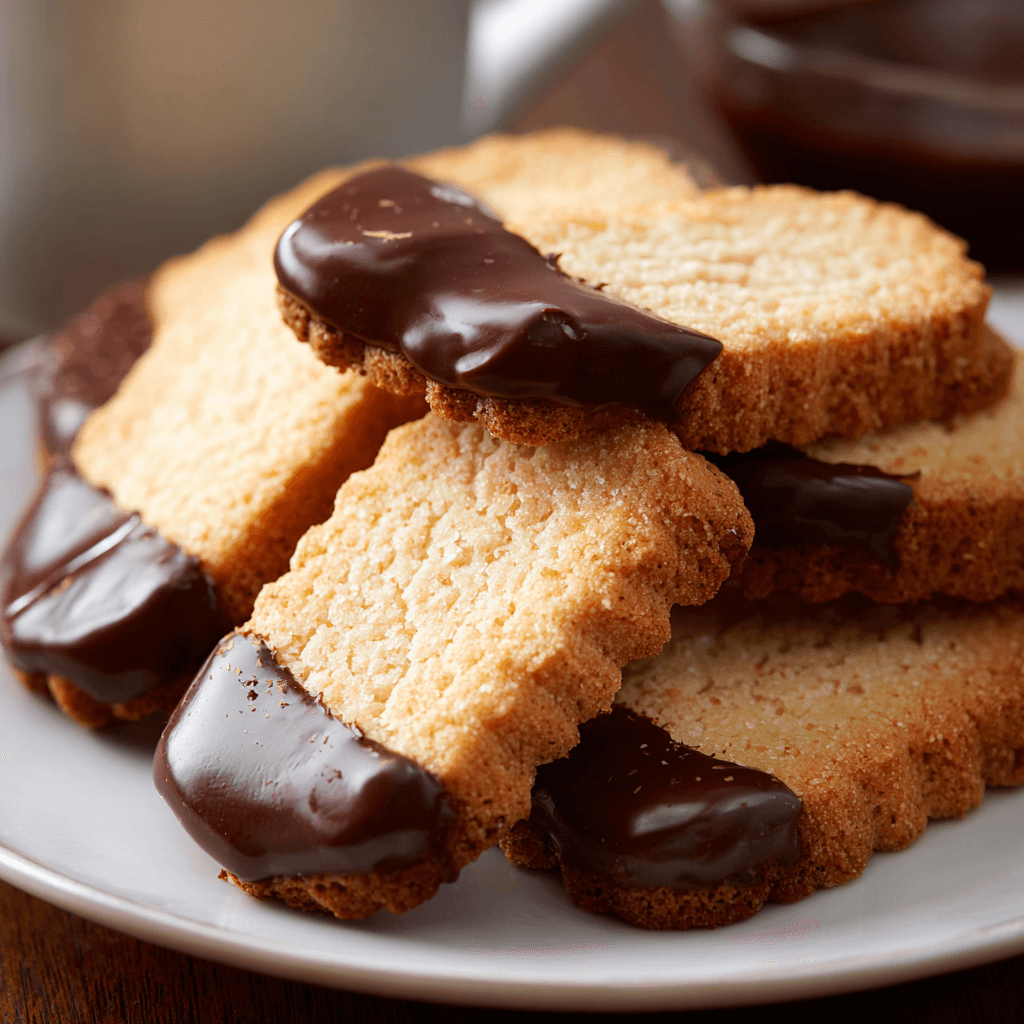
There is a quiet elegance in a traditional shortbread cookie. While other biscuits rely on complex leavenings or a long list of spices, shortbread is a celebration of just three core elements: flour, sugar, and high-quality butter. However, when you introduce a partial coating of rich, tempered dark chocolate and a hint of sea salt, this humble Scottish classic is elevated into a sophisticated confection.
The hallmark of a great shortbread is its “short” texture—a crumbly, sandy consistency that melts away the moment it hits the tongue. The addition of a chocolate dip provides a bitter-sweet snap that balances the heavy, milky richness of the biscuit. It is the ideal companion for a strong cup of tea or a mid-afternoon espresso.
Ingredients
Because there are so few ingredients, the quality of your butter is paramount. Use a European-style butter with a high fat content for the best flavor and texture.
For the Shortbread
- Unsalted Butter: 225g (1 cup), softened but still cool to the touch.
- Granulated Sugar: 100g (1/2 cup).
- All-Purpose Flour: 300g (approx. 2 1/4 cups).
- Fine Sea Salt: 1/2 teaspoon.
- Vanilla Bean Paste: 1 teaspoon (optional, for a deeper aroma).
For the Chocolate Dip
- Dark Chocolate (60-70% Cocoa): 200g, finely chopped.
- Coconut Oil: 1 teaspoon (this helps thin the chocolate for a smoother dip).
- Flaky Sea Salt: For garnishing.
Instructions
Step 1: Cream the Butter
In a large bowl, beat the softened butter and granulated sugar together until smooth and creamy. Unlike a cake, you don’t want to incorporate too much air here; you are looking for a unified paste rather than a fluffy cloud. Stir in the vanilla bean paste if using.
Step 2: Incorporate the Flour
Sift in the flour and fine sea salt. Use a spatula or your hands to work the flour into the butter until a soft dough forms. It may look crumbly at first, but it will come together as you press it. Do not over-work the dough, as this will develop gluten and make the cookies tough instead of crumbly.
Step 3: Shape and Chill
Roll the dough out between two sheets of parchment paper to a thickness of about 1cm. Using a sharp knife or a rectangular cutter, slice the dough into “fingers” (roughly 2cm x 7cm). Prick each finger twice with a fork—this is the traditional “docking” that allows steam to escape. Chill the cut cookies in the fridge for at least 30 minutes.
Step 4: The Bake
Preheat your oven to 150°C (300°F). Shortbread is meant to be “dried” rather than browned. Bake for 25–30 minutes until the cookies feel firm and are a very pale golden color. Let them cool completely on a wire rack before dipping.
Step 5: The Chocolate Dip
Melt the dark chocolate and coconut oil in a small heat-proof bowl over a pan of simmering water (a double boiler). Once smooth, remove from heat. Line a baking sheet with clean parchment paper.
Step 6: Finishing Touches
Dip each cooled shortbread finger halfway into the melted chocolate. Let the excess drip off, then place the cookie on the parchment paper. Immediately sprinkle a few flakes of sea salt over the wet chocolate. Let the chocolate set at room temperature (or 10 minutes in the fridge) until firm.
Flavor and Texture Notes
This cookie is a study in buttery decadence. The shortbread itself has a tender, sandy crumb with a clean, toasted-flour taste. The dark chocolate provides a glossy, crisp shell that introduces a sophisticated bitterness. The final hit of flaky salt acts as a bridge, heightening both the sweetness of the sugar and the richness of the cocoa.
Tips and Variations
- The Cold Factor: Always chill your dough before baking. If the butter is too warm when it enters the oven, the cookies will spread and lose their sharp edges.
- Espresso Shortbread: Add 1 tablespoon of finely ground instant espresso powder to the flour for a “Mocha” version of this recipe.
- Citrus Lift: Zest a lemon or orange into the butter-sugar mixture to add a bright, floral note that pairs beautifully with dark chocolate.
- Nutty Crunch: Instead of salt, dip the wet chocolate into finely crushed toasted hazelnuts or pistachios.
Storage and Make-Ahead
Shortbread is famous for its shelf life. Because of the high fat content and low moisture, these cookies stay fresh in an airtight container at room temperature for up to 2 weeks.
If you are making them for a gift, they travel exceptionally well. You can also freeze the raw, shaped dough for up to 3 months—just bake them directly from the freezer, adding 2–3 minutes to the total bake time.
Serving Suggestions
For a classic presentation, serve these on a simple white ceramic plate to let the dark chocolate contrast stand out. They are excellent when dipped into a warm drink, as the chocolate melts slightly and the shortbread soaks up the liquid without falling apart. For a dessert platter, pair them with fresh raspberries and a small bowl of whipped cream.
FAQ
Why did my shortbread spread in the oven?
This usually happens if the butter was too soft or melted, or if the oven wasn’t fully preheated. Chilling the dough is the best defense against spreading.
Can I use milk chocolate instead?
Yes, though the result will be much sweeter. If using milk chocolate, omit the flaky sea salt garnish and perhaps add a drizzle of white chocolate instead.
Why is my shortbread brown instead of pale?
Shortbread should be baked at a low temperature. If your oven runs hot, it will caramelize the sugars too quickly. Try lowering the heat by 10 degrees and baking for a few minutes longer.
Conclusion
The Chocolate-Dipped Shortbread is a testament to the power of simplicity. By taking a time-honored recipe and adding a modern, textural finish, you create a treat that feels both familiar and indulgent. It’s a rewarding bake that requires no special equipment—just patience and the best butter you can find.