
Follow Me On Social Media!
Classic Crepes

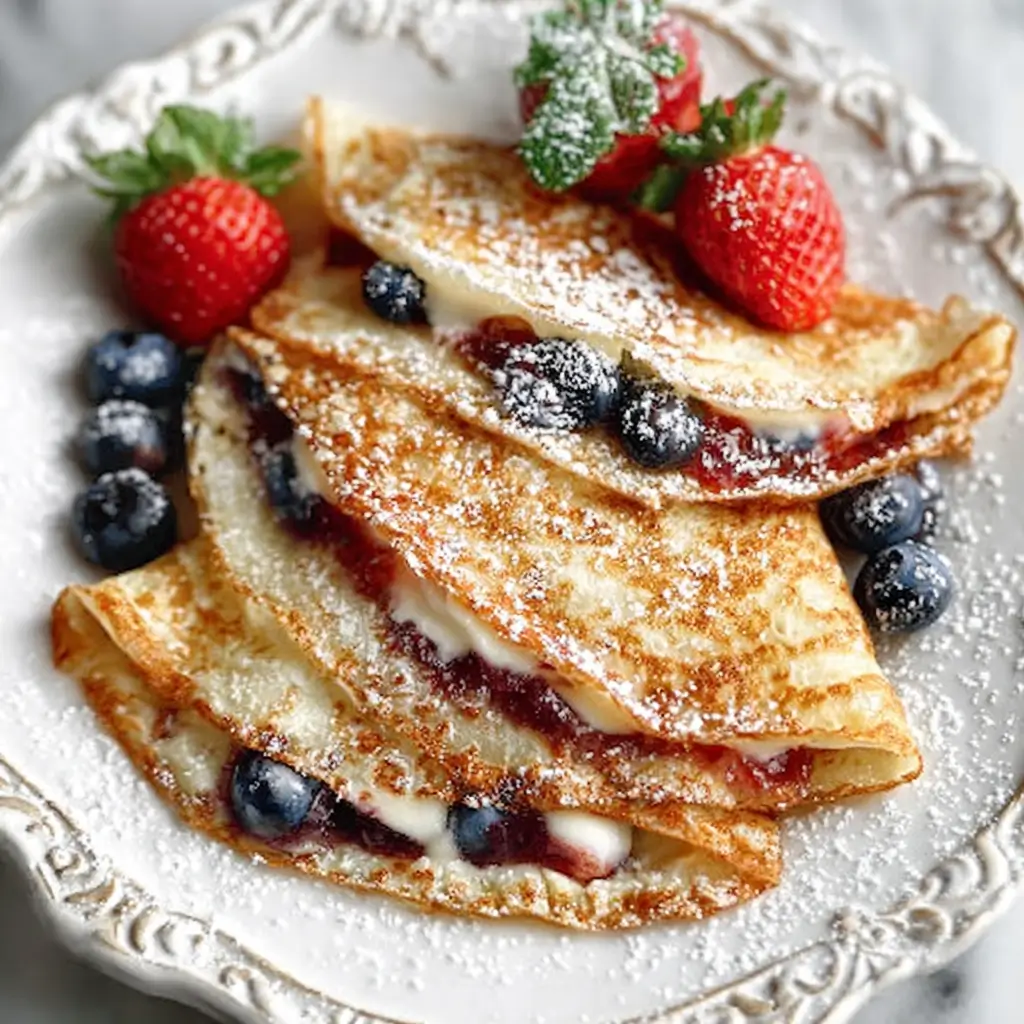
Classic crepes are thin, delicate pancakes made from a simple batter and cooked quickly in a hot pan. This recipe uses a no-leavening technique that produces a smooth, flexible texture ideal for both sweet and savory fillings. The final result is light, tender crepes that can adapt effortlessly to any meal of the day.
Why You’ll Love This Recipe
- Incredibly Versatile – Works equally well with sweet or savory fillings, from breakfast to dinner.
- Simple Pantry Ingredients – Made with basic staples you likely already have on hand.
- Quick Cooking Technique – Each crepe cooks in minutes, making the process efficient once started.
- Customizable Flavor Profile – Batter can be subtly sweetened or left neutral depending on use.
- Elegant Yet Approachable – Produces restaurant-style results with home-kitchen methods.
- Make-Ahead Friendly – Crepes store and reheat beautifully for later use.
Ingredients You’ll Need
For the Basic Crepe Batter
- 1 cup all-purpose flour – Provides structure while keeping the crepes tender and flexible.
- 2 large eggs – Bind the batter and contribute richness and elasticity.
- 1½ cups whole milk – Hydrates the flour and creates a pourable batter consistency.
- 2 tbsp unsalted butter, melted (plus more for cooking) – Adds flavor and prevents sticking.
- ¼ tsp salt – Enhances flavor and balances sweetness or savory fillings.
- 1 tbsp granulated sugar (optional) – Lightly sweetens the batter for dessert-style crepes.
- 1 tsp vanilla extract (optional) – Adds aroma and depth for sweet applications.
Step-by-Step Instructions
Mix the Dry Ingredients
In a mixing bowl, whisk together the flour and salt (and sugar, if using) until evenly combined and free of lumps.
Combine the Wet Ingredients
In a separate bowl, beat the eggs, then whisk in the milk and melted butter until smooth.
Form the Batter
Gradually add the wet mixture to the dry ingredients, whisking continuously until a smooth, lump-free batter forms.
Rest the Batter
Allow the batter to rest for at least 30 minutes at room temperature to fully hydrate the flour and improve texture.
Heat the Pan
Preheat a non-stick skillet or crepe pan over medium heat and lightly grease with butter.
Cook the Crepes
Pour about ¼ cup of batter into the center of the pan, swirling immediately to spread thinly. Cook for 1–2 minutes until the edges lift and the underside is lightly golden, then flip and cook for 30–60 seconds more.
Repeat and Keep Warm
Transfer cooked crepes to a plate, cover loosely with a clean towel, and repeat with remaining batter, re-buttering as needed.
Recipe Notes & Tips
- Resting Is Essential – Hydrated flour prevents tearing and improves flexibility.
- Thin Batter Is Correct – Crepe batter should be looser than pancake batter for proper spreading.
- Pan Temperature Control – Medium heat ensures even cooking without browning too quickly.
- First Crepe Is a Test – Use it to adjust heat and batter quantity if needed.
- Minimal Grease – Too much butter can fry rather than gently cook the crepes.
Nutritional Information
- Prep Time: 10 minutes
- Resting Time: 30 minutes
- Cook Time: 15 minutes
- Total Time: ~55 minutes
- Servings: 8–10 crepes
- Calories: ~110 calories per crepe (estimated, excluding fillings)
Perfect Pairings
- Fresh Berries & Whipped Cream – Adds freshness and lightness.
- Nutella or Chocolate Spread – Classic sweet option with rich contrast.
- Ham and Gruyère Cheese – Savory pairing with balanced saltiness.
- Sautéed Vegetables – Ideal for lunch or dinner-style crepes.
Ideal Occasions
- Weekend Breakfasts or Brunches – Relaxed and customizable for guests.
- Light Lunches – Easy to fill with proteins and vegetables.
- Dinner Alternatives – Savory crepes work well as a main course.
- Dessert Spreads – Perfect base for sweet sauces and toppings.
Storage & Serving Tips
- Refrigeration – Store cooked crepes in an airtight container for up to 3 days.
- Freezing – Freeze up to 2 months with parchment paper between each crepe.
- Reheating – Warm gently in a skillet over low heat or microwave briefly.
- Serving Tip – Fill crepes just before serving to maintain texture.
Creative Variations to Try
- Buckwheat Crepes – Swap part or all of the flour for buckwheat for a savory option.
- Chocolate Crepes – Add 2 tablespoons cocoa powder for dessert crepes.
- Herb Crepes – Add finely chopped herbs to the batter for savory fillings.
- Dairy-Free Crepes – Use plant-based milk and oil instead of butter.
Troubleshooting Common Issues
- Crepes Tear Easily – Batter may be too thick or not rested long enough.
- Uneven Cooking – Pan may be too hot or not evenly heated.
- Rubbery Texture – Overcooking or excessive flipping can cause toughness.
- Batter Won’t Spread – Adjust consistency with a small splash of milk.
Why This Recipe Works
Crepes rely on a balanced ratio of flour, liquid, and eggs to create elasticity without leavening. Resting the batter allows gluten strands to relax, resulting in pliable, tear-resistant crepes. Controlled heat ensures gentle protein coagulation, keeping the texture soft rather than crisp. At roughly 110 calories per crepe, they provide a flexible base that can be light or indulgent depending on fillings.
Final Thoughts
Classic crepes are a foundational recipe every home cook should master due to their adaptability and simplicity. With minimal ingredients and a bit of technique, they transform into countless sweet or savory dishes. By choosing lighter fillings like fruit or vegetables, crepes can also fit into balanced eating while still feeling special and satisfying.