Follow Me On Social Media!
Chewy Coconut Macaroons: The Ultimate Five-Ingredient Delight.

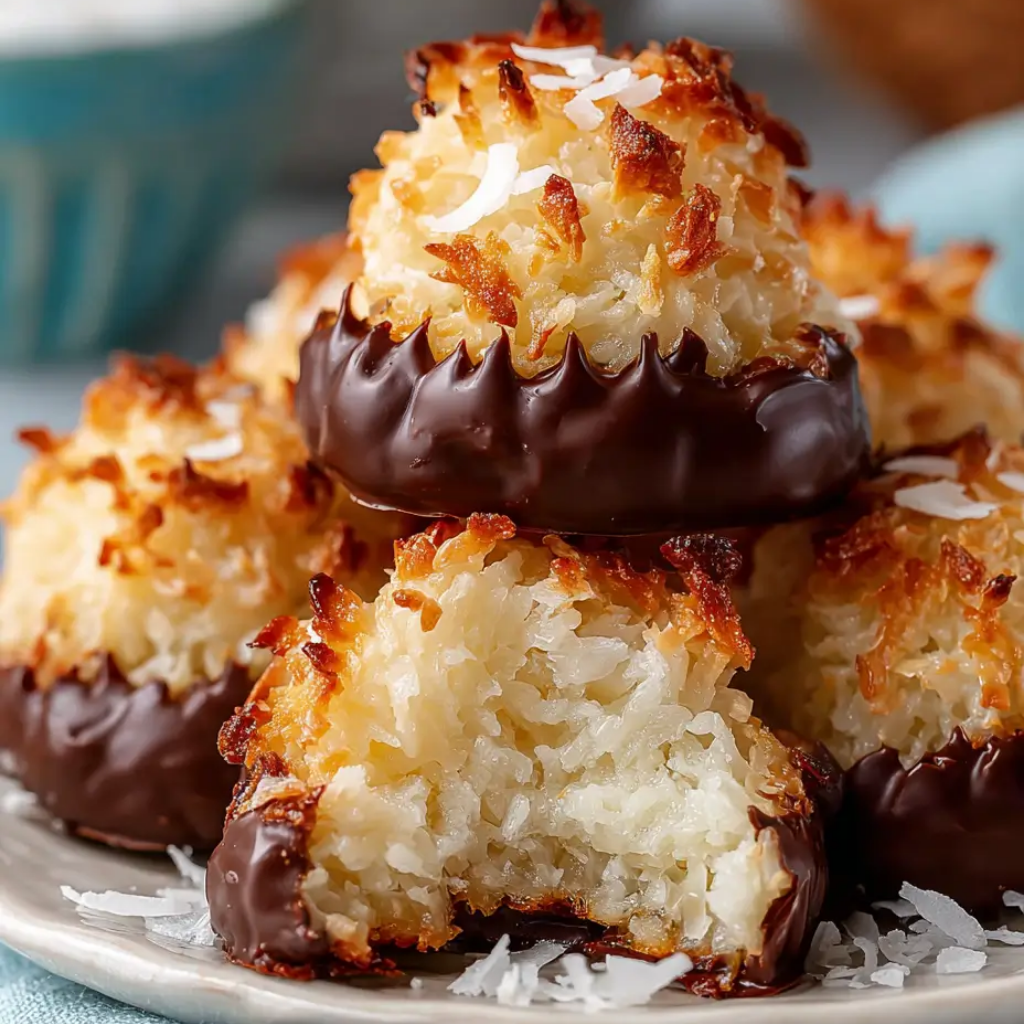
Coconut macaroons occupy a unique space in the world of confections. Unlike the temperamental French macaron (made with almond flour and meringue), the coconut macaroon is a sturdy, rustic, and unpretentious treat. It is a dessert defined by its architecture: a golden, toasted exterior that shatters slightly upon biting, leading into a center that is dense, moist, and intensely chewy.
The beauty of this recipe lies in its simplicity. By relying on the natural oils of shredded coconut and the binding power of sweetened condensed milk, you can create a bakery-quality cookie with minimal effort. They are naturally gluten-free, require only one bowl, and have an incredible shelf life—making them the perfect addition to a holiday cookie platter or a simple afternoon tea.1
Ingredients
To achieve the perfect “chew,” the moisture content of your coconut is key. Avoid the large, dry flakes often found in the health food aisle; instead, look for the standard sweetened shredded coconut.
- Sweetened Shredded Coconut: 14 oz (1 standard bag).2
- Sweetened Condensed Milk: 2/3 cup. (Do not confuse this with evaporated milk, which will not set).
- Vanilla Extract: 1 teaspoon.3
- Fine Sea Salt: 1/4 teaspoon. This is essential to balance the sweetness of the milk and coconut.
- Egg Whites: 2 large, room temperature.
- Optional: 4 oz of Semi-Sweet Chocolate (for drizzling or dipping).4
Instructions
Prep the Oven and Pan
Preheat your oven to 325°F. Line a large baking sheet with parchment paper or a silicone baking mat. Macaroons are high in sugar and will stick aggressively to a bare pan, so don’t skip the liner.
Mix the Base
In a large mixing bowl, stir together the shredded coconut, sweetened condensed milk, vanilla extract, and salt. Ensure every strand of coconut is thoroughly coated in the milk. At this stage, the mixture will be very thick and sticky.
Whip the Egg Whites
In a separate clean, dry bowl, beat the 2 egg whites with a hand mixer or whisk until they form firm peaks. You want them to hold their shape but not be overly dry. Fold the egg whites gently into the coconut mixture using a rubber spatula. This step is the “secret” to a macaroon that is light and airy rather than a heavy, dense brick.
Scoop and Shape
Using a tablespoon or a small cookie scoop, drop rounded mounds of the mixture onto the prepared baking sheet, spacing them about an inch apart.5 For the neatest look, dampen your fingers with a little water and gently tuck in any stray strands of coconut that are sticking out; these thin pieces tend to burn first.
Bake to a Golden Glow
Bake for 20 to 25 minutes. You are looking for the bottoms and the “peaks” of the macaroons to turn a deep golden brown. The center should still feel somewhat soft to the touch.
Cool and Dip
Let the macaroons cool completely on the baking sheet. They will firm up significantly as they cool. If you want to elevate them, melt the semi-sweet chocolate in a microwave-safe bowl. Dip the bottoms of the cooled macaroons into the chocolate and place them back on the parchment paper to set, or drizzle the chocolate over the tops in a decorative pattern.
Flavor and Texture Notes
The first sensation is the toastiness—the shredded coconut on the exterior roasts in the oven, taking on a nutty, caramelized flavor. As you move toward the center, the texture shifts to a soft, milky “fudge” consistency.
Because of the vanilla and the salt, the flavor isn’t just one-dimensional sugar. It tastes like a tropical praline. If you opt for the chocolate dip, you add a layer of dark cocoa bitterness that cuts through the richness of the condensed milk, creating a flavor profile reminiscent of a gourmet “Almond Joy” (minus the almonds).
Tips and Variations
- The Almond Twist: Add 1/2 teaspoon of almond extract along with the vanilla for a more complex, nutty aroma.
- Citrus Brightness: Stir in the zest of one lime. The acidity of the lime pairs beautifully with the coconut and makes the macaroon feel lighter.
- Chocolate Chip Macaroons: Fold in 1/2 cup of mini chocolate chips before baking for a double-chocolate experience.7
- The No-Egg Version: If you prefer an even denser, more “candy-like” macaroon, you can omit the egg whites and increase the condensed milk to 3/4 cup. The result will be flatter and much chewier.
Storage and Make-Ahead
- Room Temperature: These cookies stay moist for a long time. Store them in an airtight container at room temperature for up to 7 days.
- Freezing: Macaroons freeze exceptionally well. Place them in a freezer bag for up to 3 months. You can even eat them straight from the freezer for a firm, chewy snack!
- Avoid Humidity: Coconut is hygroscopic, meaning it absorbs moisture from the air.8 In very humid weather, the macaroons may lose their exterior crunch.
FAQ
Can I use unsweetened coconut?
Yes, but since unsweetened coconut is drier, you may need to add an extra tablespoon of condensed milk to ensure they don’t fall apart. You may also want to increase the sugar slightly if you prefer a traditional sweet macaroon.
Why did my macaroons spread into a puddle?
This usually happens if the egg whites weren’t whipped enough or if they were folded in too vigorously, deflating the air. It can also happen if you used evaporated milk instead of condensed milk.
How do I get the chocolate to set?
If your kitchen is warm, the chocolate might stay soft. Pop the chocolate-dipped macaroons in the refrigerator for 10 minutes to help the chocolate snap into a firm shell.
Conclusion
Coconut Macaroons are a reminder that the most satisfying desserts often come from the simplest ingredients. They are a “pantry-staple” miracle—transforming a bag of coconut and a can of milk into a sophisticated, golden treat. Whether you’re looking for a gluten-free option for a guest or just want a cookie that stays fresh all week, the macaroon is a reliable, delicious classic.