Follow Me On Social Media!
Baked Boursin Salmon: A Creamy and Flavorful Dish.

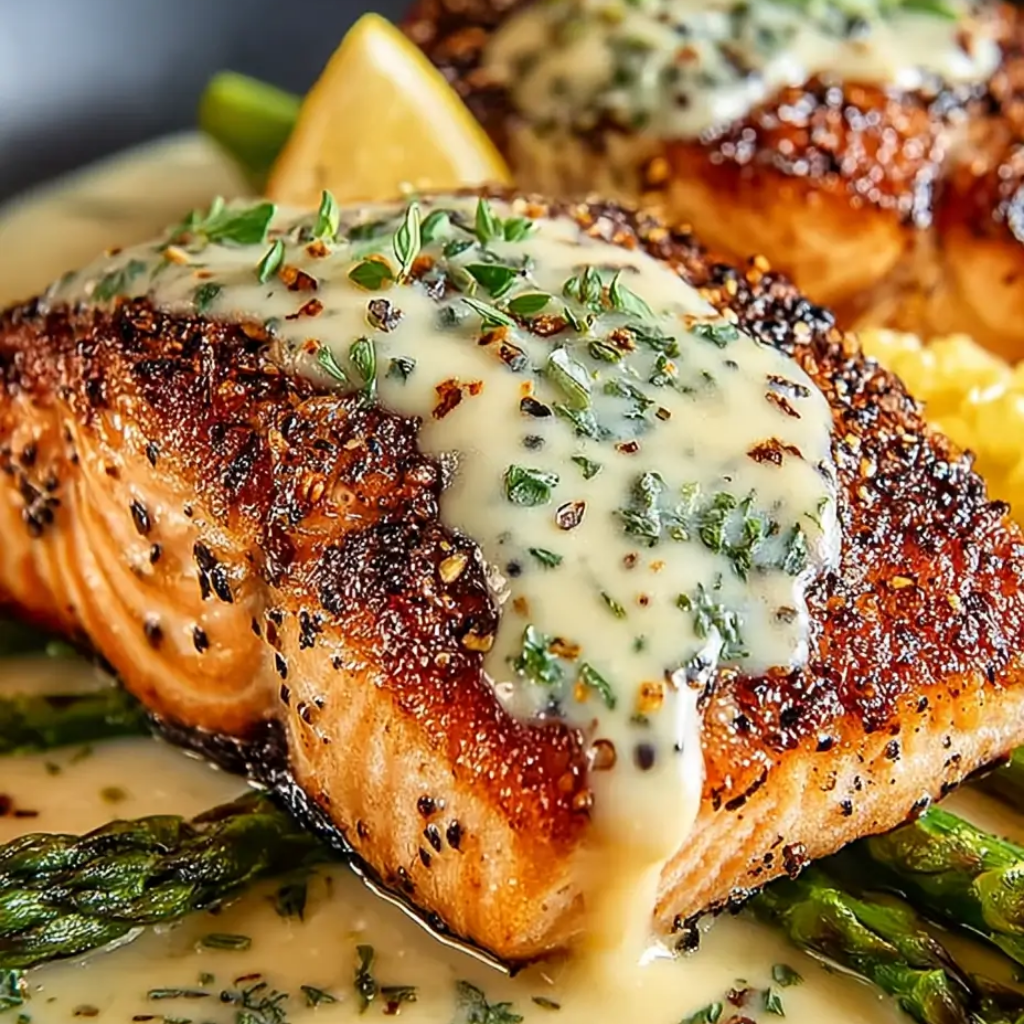
There is a common misconception that elegant, restaurant-quality seafood requires hours of preparation and a culinary degree. In reality, some of the most impressive dishes are those that rely on a few high-quality ingredients used strategically. This Baked Boursin Salmon is the perfect example. It is a sophisticated, “one-pan” wonder that feels like a splurge but takes less than twenty minutes from start to finish. By using a herbed gournay cheese as both a seasoning and a sauce, you eliminate the need for complex marinades or stovetop reductions.
I first started making this version of salmon on those frantic weeknights when I wanted a meal that felt “adult” and nourishing but only had the energy for minimal cleanup. The Boursin cheese—a crumbly, creamy cheese packed with garlic and fine herbs—melts into the salmon as it bakes, creating a self-basting topping that keeps the fish incredibly moist.1 It’s a foolproof method that solves the number one problem with home-cooked salmon: dryness. Whether you are hosting a small dinner party or just treating yourself after a long day, this dish delivers a rich, velvety experience with almost zero effort.
Ingredients
The Main Components
- 4 Salmon Fillets: Approximately 6 oz each.2 Center-cut fillets are ideal as they have a uniform thickness and cook evenly.
- 5.2 oz Package Boursin Cheese: The “Garlic & Fine Herbs” flavor is the classic choice, but the “Shallot & Chive” version is also excellent.
- 1 Bunch Thin Asparagus: Trimmed of the woody ends. These cook in the exact same time as the salmon, making them the perfect tray-mate.
- 1 Tablespoon Extra Virgin Olive Oil: To coat the asparagus.
The Seasoning and Garnish
- 1/2 Teaspoon Lemon Zest: To cut through the richness of the cheese.
- 1/4 Teaspoon Smoked Paprika: For a hint of color and a very subtle warmth.
- Salt and Black Pepper: To taste.
- Fresh Dill or Parsley: For a bright, herbal finish.
- Lemon Wedges: For serving.
Instructions
1. Prepare the Pan
Preheat your oven to 400°F (200°C). Line a large rimmed baking sheet with parchment paper or a silicone mat. This not only prevents the cheese from sticking to the pan but makes cleanup as simple as throwing away a piece of paper.
2. Season the Base
Pat the salmon fillets dry with a paper towel. Place them on the baking sheet, leaving about two inches of space between each fillet. Arrange the trimmed asparagus around the salmon. Drizzle the asparagus with olive oil and a pinch of salt and pepper, tossing them gently to ensure they are coated. Season the salmon fillets lightly with salt and pepper as well, keeping in mind that the Boursin cheese is already seasoned.
3. Apply the Boursin “Crust”
Take your Boursin cheese (it’s easier to work with if it’s at room temperature) and divide it into four equal portions. Gently press a portion of cheese onto the top of each salmon fillet, spreading it out into an even layer. It doesn’t have to be perfect; as it heats up, it will soften and coat the fish beautifully. Sprinkle a pinch of smoked paprika and the lemon zest over the cheese for a professional look.
4. Bake to Perfection
Slide the baking sheet into the center of the oven. Bake for 12 to 15 minutes, depending on the thickness of your fillets. You are looking for the salmon to be opaque and for it to flake easily with a fork. The Boursin should be soft, slightly melted, and just starting to turn golden at the edges.
5. Final Touch
Remove the pan from the oven and let the salmon rest for two minutes. This allows the juices to redistribute so the fish stays tender. Garnish with fresh dill or parsley and serve immediately with a fresh squeeze of lime or lemon juice to brighten the flavors.
Flavor and Texture Notes
This dish is a study in luxury. The salmon itself is tender and buttery, while the Boursin cheese transforms into a thick, savory cream that acts as both a topping and a sauce.3 Because the cheese is packed with garlic, chives, and parsley, every bite is infused with a garden-fresh aroma.
The lemon zest is a small but vital addition; it provides a high, citrusy note that balances the heavy fats in the salmon and the cheese.4 The asparagus, roasted in the same pan, picks up some of the melted cheese drippings, becoming savory and slightly charred. It’s a clean, focused flavor profile that feels substantial without being heavy.
Tips and Variations
While the garlic and herb version is a classic, you can easily pivot this recipe to fit your pantry:
- Add a Crunch: Mix a tablespoon of panko breadcrumbs with a little melted butter and sprinkle it on top of the cheese before baking for a “crusted” texture.
- Switch the Veggies: If you don’t like asparagus, thinly sliced zucchini or cherry tomatoes work perfectly. Just ensure they are vegetables that cook quickly.
- Spinach Base: You can place the salmon fillets on a bed of fresh baby spinach. The juices from the fish and the melting cheese will wilt the spinach into a built-in side dish.
- Dairy-Free Option: There are now several high-quality plant-based “herbed spreadable cheeses” on the market that mimic the texture of Boursin remarkably well.
Storage and Make-Ahead
Salmon is always best eaten immediately after cooking, but this recipe holds up better than most due to the protective cheese layer.
- Refrigeration: Store any leftovers in an airtight container for up to 2 days.
- Reheating: To prevent the salmon from becoming rubbery, reheat it in a 325°F oven for about 8 minutes, or until the cheese is soft again. Avoid the microwave if possible, as it can cause the fish to overcook quickly.
- Make-Ahead: You can prep the entire tray (salmon and veggies) up to 4 hours in advance. Cover it tightly with plastic wrap and keep it in the fridge until you are ready to preheat the oven and bake.
Serving Suggestions
Since this is a one-pan meal, it’s already quite complete. However, if you want to round out the plate, a side of fluffy jasmine rice or roasted fingerling potatoes is excellent for soaking up any extra melted cheese.
For a lighter option, a simple arugula salad with a balsamic vinaigrette provides a peppery contrast to the creamy Boursin. As for beverages, a chilled Sauvignon Blanc or a light Pinot Grigio has the acidity necessary to cut through the richness of the dish, making for a perfectly balanced evening meal.
FAQ
Do I need to remove the skin from the salmon?
No, it is actually better to leave the skin on during baking. It acts as a buffer between the heat of the pan and the delicate flesh, helping the fish stay moist. You can easily slide a spatula between the skin and the meat when you serve it.
Can I use frozen salmon?
Yes, just ensure it is completely thawed and very dry before you add the cheese. If there is excess moisture, the cheese will slide off the fish during the baking process.
What if my Boursin cheese is too crumbly to spread?
Boursin is naturally crumbly. If you’re having trouble getting it to stick, mash it in a small bowl with a fork and a teaspoon of olive oil first to create a more pliable paste.
Is this dish keto-friendly?
Yes! This is an excellent low-carb, high-fat meal. Salmon and Boursin cheese are both keto staples, making this a satisfying option for those following a ketogenic lifestyle.5
Conclusion
Baked Boursin Salmon is a testament to the fact that you don’t need a sink full of dishes to eat well. It is a reliable, elegant solution for those nights when you want to feel like you’ve truly “cooked” without the associated stress. By letting the ingredients do the work, you’re left with a meal that is consistently delicious and undeniably impressive.